




Inside the white paper, you'll learn:
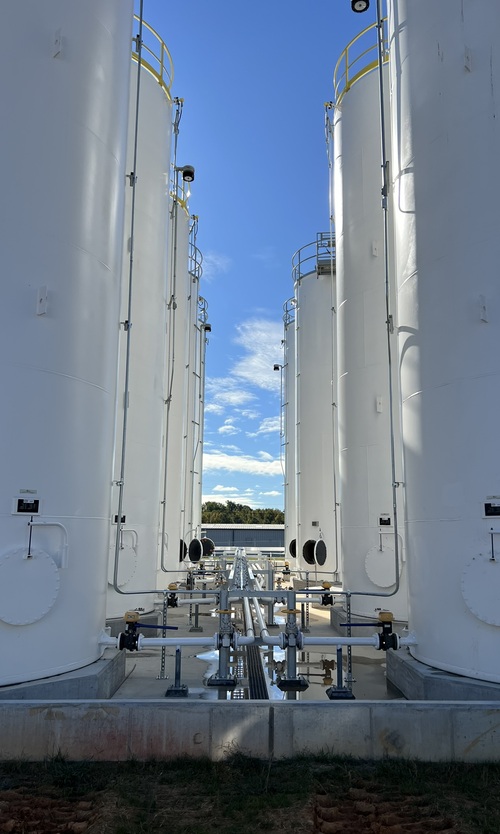
Large-scale chilled water storage gives operators the ability to separate when cooling is produced from when cooling is needed. Chilled water can be produced during lower-demand periods, stored, and discharged as cooling demand rises or when reducing active chiller load becomes advantageous.
For mission-critical facilities, however, successful Thermal Energy Storage requires more than adding tank capacity. Tank geometry, thermal stratification, materials, corrosion protection, structural requirements, system integration, fabrication quality and installation logistics can all influence long-term performance.
This white paper examines those considerations from the tank fabrication and project-execution perspective.
The white paper also includes a project-planning checklist covering:
System Requirements
Tank Configuration
Materials & Corrosion Control
Project Execution
Why Tate Metalworks?
Precision Fabrication for Demanding Industrial Applications
Thermal Energy Storage tanks are not standalone pieces of equipment. Their performance depends on how effectively tank design and fabrication align with the larger cooling system, project site and long-term operating requirements.
Tate Metalworks works with project teams to develop practical fabrication solutions for complex industrial storage applications. Early collaboration can help teams identify transportation constraints, field-erection requirements, nozzle and access conflicts, coating and insulation considerations, foundation coordination needs and fabrication efficiencies before those issues create downstream project risk.

 Tate serves clients Nationwide, from our Headquarters in the Upstate of South Carolina.
© 2026 Tate Metalworks. All Rights Reserved|
Privacy & Cookies |
Site by ALINE, A Marketing Company